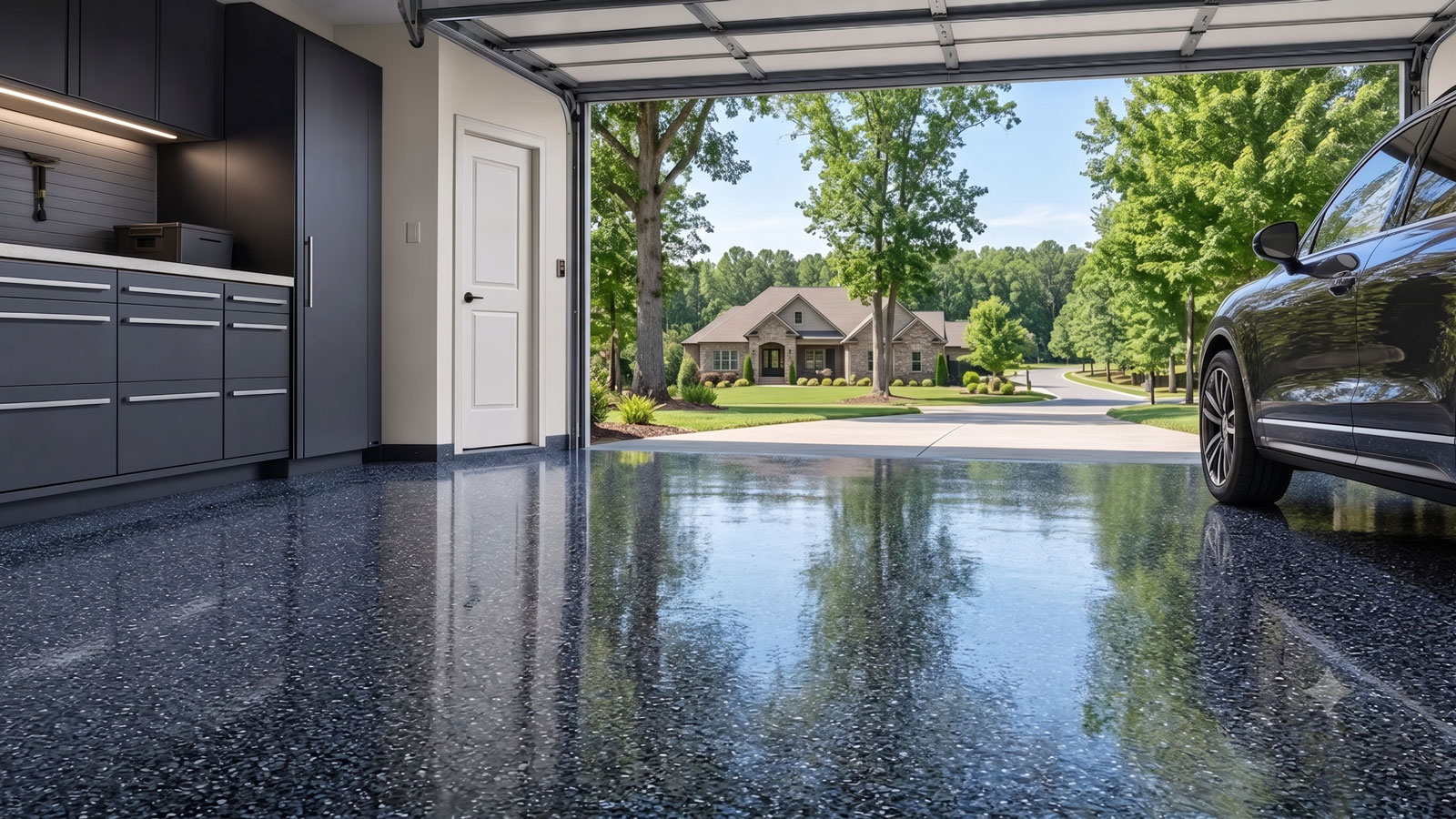
Garage Floor Coating in Falmouth, ME
Compare epoxy, polyaspartic and decorative-flake garage floor coating in Falmouth, Maine. Explore concrete preparation, local conditions and project costs.
Floor Coating Services in Falmouth, ME
Garage floor coating in Falmouth should begin with a real inspection of residential garages in a mix of coastal and inland settings. Falmouth implements a five-year stormwater plan with annual state reporting. This is useful local context, but it does not establish that a private slab has water damage or deicing-salt deterioration. Inspect actual paint, sealer, stains, cracks, and repairs before choosing a resin coating system.
The town has a non-stormwater discharge ordinance and supports a watershed planning program. Falmouth's public information connects runoff to Highland Lake, the Presumpscot River and Casco Bay. Winter road treatment, repeated freeze-and-thaw weather and wet tires make cleanup worth planning for Maine garages. But meltwater beneath a parked vehicle differs from rain crossing a threshold and from persistent slab moisture. Ask the installer to distinguish those conditions rather than promise a decorative finish will fix drainage.
In residential garages in a mix of coastal and inland settings, the work may require old-coating removal, mechanical grinding, specific crack or joint treatment and an installation window compatible with the chosen product. For cars, recreational equipment and occasional workshop tasks, finish texture, cleaning instructions, cure time and alternative parking deserve attention. Ask for the full system specifications.
Local Market Insight
Falmouth's public information connects runoff to Highland Lake, the Presumpscot River and Casco Bay. This is useful context when assessing wet-vehicle tracking, driveway pitch and old repairs, not proof of a coating defect or moisture condition at a particular garage.
What Affects the Cost of Garage Floor Coating in Falmouth?
A Falmouth quote should reflect actual concrete condition, not only a per-square-foot rate. With wet-vehicle tracking, driveway pitch and old repairs, preparation may need extra labor if those conditions are observed. Ask for separate costs or clear scope descriptions for removal, grinding, patches and edge work.
Winter scheduling is a practical factor. Where cars, recreational equipment and occasional workshop tasks, plan when equipment can be moved and when vehicles can return under the product's cure requirements. The installer should explain temperature limitations, condensation risks and routine care.
- Existing slab finish: A garage in residential garages in a mix of coastal and inland settings may have paint, sealer, old resin or sound bare concrete. The crew should identify actual films and prepare a suitable mechanical profile rather than assume age determines adhesion.
- Salt and road grit: Falmouth implements a five-year stormwater plan with annual state reporting. Maine winter vehicles may bring saltwater and grit indoors; the amount on any slab must be inspected. Cleaning and surface preparation should address real contamination.
- Concrete joints and repairs: Cracks, spalls and previous patches can change labor. Movement joints may need an appropriate flexible treatment rather than being bridged by a decorative coating expected to stop concrete movement.
- Threshold and driveway: For wet-vehicle tracking, driveway pitch and old repairs, inspect the actual door seal, drive pitch and downspouts. A nearby brook or coastline does not prove that water enters a home; persistent moisture needs its own assessment.
- Texture and cleaning: Flake color, broadcast density, slip-resistant texture and topcoat determine appearance and maintenance. Wet boots and vehicles make traction and easy residue removal worth discussing in the quote.
- Curing and access: Products have defined temperature, humidity and return-to-service conditions. Garages used for cars, recreational equipment and occasional workshop tasks need scheduling and temporary parking that fit those instructions, including cold-season limitations.
Call for a clear, project-specific estimate — or request one online.
Falmouth Winter Road Salt, Snowmelt and Drainage
Falmouth implements a five-year stormwater plan with annual state reporting. The town has a non-stormwater discharge ordinance and supports a watershed planning program. Those municipal details give homeowners a concrete reason to ask about water and seasonal road contamination, but local policies cannot establish the condition of a particular concrete slab. Maine garage flooring faces different concerns depending on whether wet vehicles, a sloping driveway or an existing leaking threshold introduce the water.
Falmouth's public information connects runoff to Highland Lake, the Presumpscot River and Casco Bay. During a thaw, grit and salty meltwater can settle around car parking positions. A prepared resin-coated surface may help cleaning, yet it is not maintenance-free. Remove abrasive material and standing water as appropriate and use cleaning products approved for the coating. Discuss finish texture before choosing a smoother or rougher surface.
Examine the floor when there has been no recent vehicle use. Look for old paint blistering, recurring wet corners, water after rain and any patched concrete. The presence of a river or public stormwater project does not prove dampness in a home. Where water entry is observed, address the actual source before finishing the concrete.
Concrete Preparation and Coating Choices in Falmouth
A residential garages in a mix of coastal and inland settings may have newer concrete despite an older building, or an old resin layer over a replacement pour. A responsible quote should identify surface history by observing paint, sealer, oil and previous repairs. That is more reliable than estimating slab age from a neighborhood map or the look of the house.
Mechanical preparation matters. Ask what grinding will remove old surface material, whether cracks and joints will be treated, and whether any contaminated or deteriorated area needs special repair. Under wet-vehicle tracking, driveway pitch and old repairs, the installer should investigate only the conditions actually present, not turn the area's winter climate into a claim that every slab is damaged.
For cars, recreational equipment and occasional workshop tasks, finish durability also depends on ordinary use after installation. Plan alternative parking, clearance around shelves and steps, desired wet-shoe grip, color and future cleaning. Epoxy and polyaspartic systems differ in installation and cure requirements; choose the one suited to the prepared slab and schedule rather than assuming a product category ensures success.
- Identify old paint, epoxy or concrete sealer.
- Inspect cracks, moving joints and patches.
- Check threshold runoff after rain or snowmelt.
- Note salt and grit where actually present.
- Arrange storage relocation and alternate parking.
- Confirm the manufacturer-based cure schedule.
Frequently Asked Questions
Does Falmouth's climate guarantee salt damage?
No. Falmouth implements a five-year stormwater plan with annual state reporting. Winter road salt makes cleaning and substrate inspection relevant, but only actual evidence shows damage or contamination. The contractor should check the floor before deciding on removal or repair.
Can an older Falmouth garage floor be coated?
Possibly. An older house may have a newer garage slab. Inspect paint, sealer, cracks, stains and repairs, and determine whether concrete is sound before choosing preparation and coating materials.
What if snowmelt keeps appearing on my garage floor?
Snow melting off parked vehicles is common and differs from groundwater or rain entering the building. If dampness remains without wet cars, investigate the slab and doorway before applying an impermeable finish.
Is epoxy or polyaspartic suitable for Falmouth winter use?
Either may be suitable after proper preparation, depending on application temperature, system specification, traction and cure requirements. Ask about the manufacturer's limits and a cleaning plan for grit and road salt.
What belongs in a Falmouth coating estimate?
Compare grinding and old-coating removal, repairs, joint treatment, finish texture, topcoat and cure instructions. For cars, recreational equipment and occasional workshop tasks, also agree on moving belongings and where to park until vehicles can return safely.
Falmouth Neighborhoods & Local Context
Phone Quote Line
Talk through your floor, coating options, and the conditions that can affect a project-specific estimate.
(207) 598-4428Typical Project Cost
$3,000–$5,500
Planning range for a typical two-car garage. Final pricing depends on floor size, slab condition, preparation, coating system, and finish options.
Helpful Guides
Other Service Areas